Blockchain technology is moving deeper into real estate—but perhaps not in the way many people imagine.
In September 2026, Pineapple Financial announced that it has moved more than $1 billion in residential mortgage records onto the Injective blockchain.
The longer-term goal is considerably larger.
Pineapple plans to migrate records associated with its historical portfolio of more than 29,000 funded mortgages representing over $10 billion in value.
That sounds significant—and it is.
But it is also important to understand exactly what is happening.
The homes themselves are not being tokenized.
The deeds are not being transferred onto the blockchain.
And homeowners aren’t suddenly receiving cryptocurrency tokens representing their mortgages.
Instead, this project is about something less flashy, but potentially very important:
the records behind the mortgages.
What Does It Mean to Put a Mortgage Record On-Chain?
A traditional mortgage generates a tremendous amount of information.
Loan information, servicing records, ownership information, payment history and other data may live across different databases, documents and systems.
When different organizations need to verify that information, they may have to compare records maintained in separate places.
Pineapple is taking a different approach.
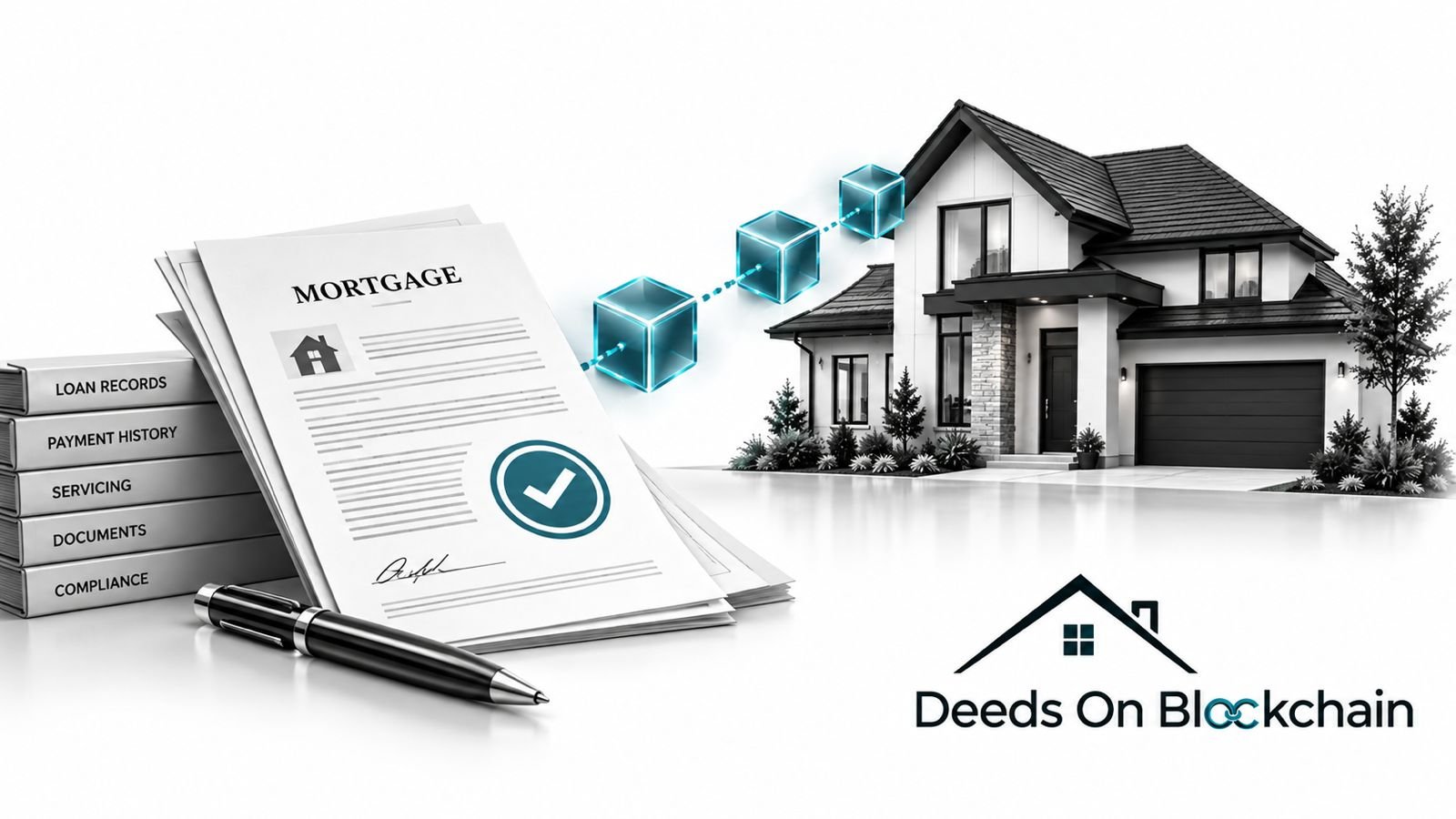
According to Injective, each mortgage in the project is represented by a digital on-chain record connected to the underlying loan file. Each record can contain more than 500 data points related to the mortgage.
The blockchain record can then provide a consistent history that authorized participants can use for verification and auditing.
Importantly, the original mortgage remains within its existing legal and servicing framework.
In other words, blockchain is being added as a new record and verification layer.
It isn’t replacing the legal mortgage.
Why Put These Records on a Blockchain?
One of blockchain’s most interesting uses may have very little to do with cryptocurrency.
It is the ability to create a record that can be independently verified.
Mortgage administration often involves multiple parties that may maintain their own records. When information is scattered across different systems, organizations may need to reconcile those records to determine which information is current and accurate.
An on-chain record could potentially provide a shared, auditable history.
In Pineapple’s implementation, Injective says the structured records can support uses such as automated verification, real-time audit trails, risk analysis and compliant information sharing.
Think of it less like putting your mortgage “into crypto” and more like creating a digital verification trail behind the mortgage.
Is This the Same as Tokenizing a House?
No.
And this is where the terminology can become confusing.
Several very different things can be described as real estate tokenization.
A company might tokenize an investment interest in a property.
Another project might tokenize real-estate debt.
A government could use blockchain technology to help verify land records.
And another system could create a blockchain record connected to a mortgage.
Those aren’t the same thing.
In Pineapple’s case, Injective specifically says these are not newly packaged mortgage securities. They are digital counterparts to mortgage records from an existing loan portfolio.
That distinction matters.
What About the Deed?
This is where the story becomes especially interesting from a property-ownership perspective.
A mortgage and a deed perform very different functions.
Generally speaking, the deed relates to ownership of the property, while a mortgage or deed of trust is part of the financing and security arrangement associated with a loan.
Putting mortgage information on a blockchain therefore does not mean that legal ownership of the property has moved onto the blockchain.
But it does demonstrate something important.
Real estate’s underlying infrastructure is beginning to experiment with blockchain-based records at meaningful scale.
Pineapple’s program has already moved more than $1 billion of residential mortgage records on-chain. Its stated goal encompasses a historical portfolio exceeding $10 billion.
That moves the conversation beyond small demonstrations and hypothetical use cases.
What Could This Eventually Mean for Homeowners?
For the average homeowner today, probably very little changes immediately.
You aren’t going to wake up tomorrow and discover that your mortgage or deed suddenly exists only on a blockchain.
But behind the scenes, the infrastructure used to manage property and financial records may continue changing.
Over time, technologies like this could potentially make it easier for authorized parties to verify information, maintain audit trails and reduce duplication between disconnected systems.
And that raises a much bigger question:
If mortgage records can become digitally verifiable, what other parts of a real estate transaction eventually could as well?
Title information.
Property records.
Identity verification.
Escrow activity.
Transaction milestones.
Documents.
And perhaps, where laws and recording systems eventually allow it, aspects of deeds and ownership records.
That does not mean all of those things should—or will—move onto public blockchains.
It does mean the technology is increasingly being tested against real problems within the existing real estate system.
Blockchain Doesn’t Replace the Legal System
This may be the most important point.
Putting information on a blockchain does not automatically make that information legally authoritative.
Property ownership, mortgages, liens, recording requirements and transfers still operate within established legal and regulatory systems.
Technology can help provide verification.
It can help create audit trails.
It can potentially improve the way information is shared.
But the legal rights attached to a property still matter.
Pineapple’s project illustrates this distinction particularly well: the mortgage continues to operate within its existing legal framework while blockchain provides an additional digital record.
Why This Development Is Worth Watching
For years, blockchain and real estate were often discussed in terms of what might happen someday.
This story is different.
There are now more than $1 billion worth of residential mortgage records represented on-chain, with a much larger portfolio targeted for migration.
That doesn’t mean the traditional real estate system is disappearing.
It means blockchain is beginning to find a place inside the infrastructure that supports it.
And that may ultimately be one of the most important developments to watch.
The future of blockchain in real estate may not begin with someone buying a house using a token.
It may begin much more quietly—with better ways to record, verify and connect the information behind the property.
Source
Injective — Pineapple Financial Tokenizes More Than $1 Billion in Mortgage Records