DTCC Launches Tokenization Service: What It Means for Blockchain and Real Estate
October 28, 2026 | Blockchain News | Deeds on Blockchain
A major milestone in blockchain adoption has arrived.
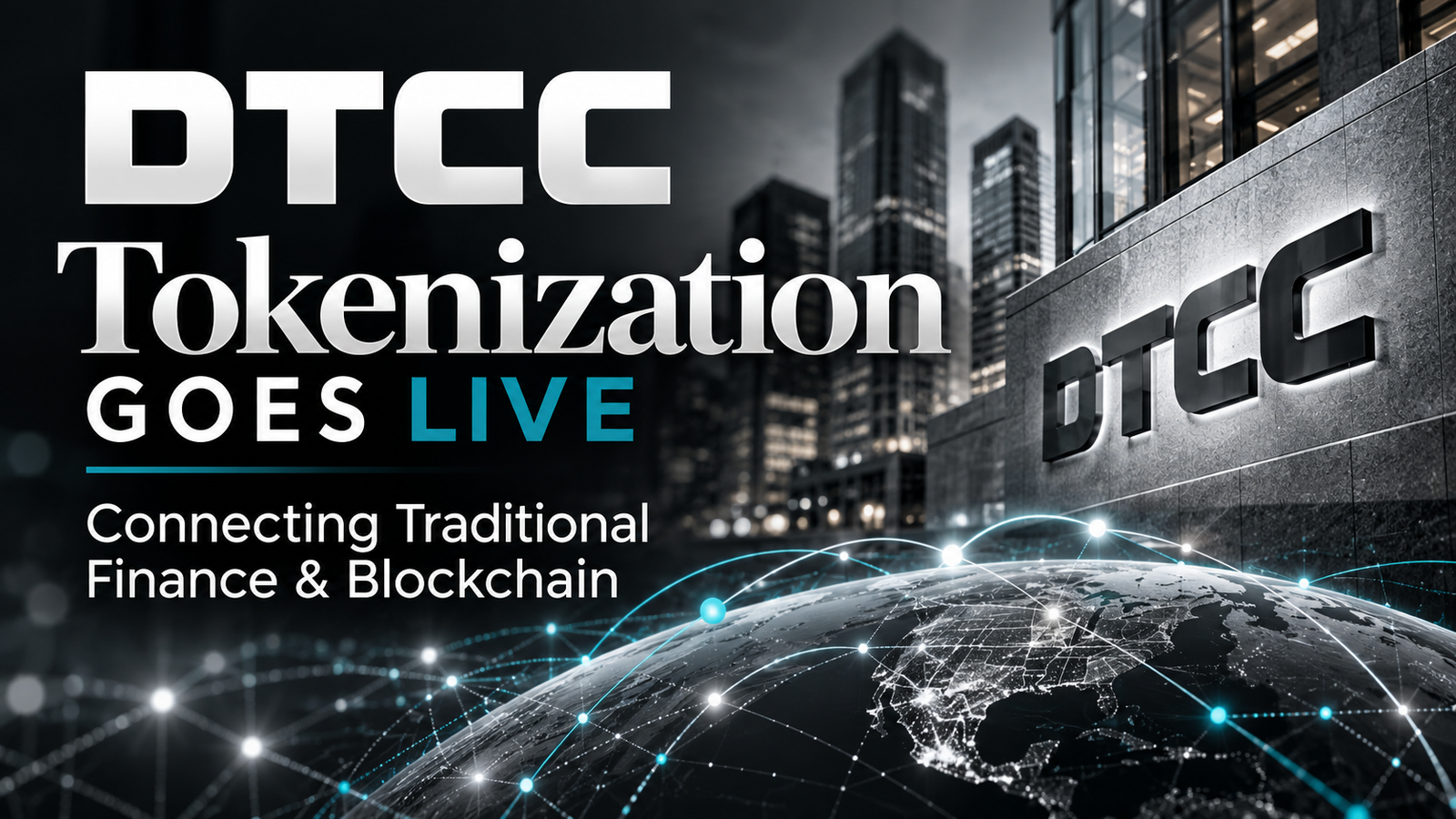
On October 28, 2026, the Depository Trust & Clearing Corporation (DTCC) officially announced that its DTCC Tokenization Service is now live, allowing eligible financial institutions to create blockchain-based representations of traditional securities.
This is an important development because DTCC plays a central role in the infrastructure supporting the U.S. financial markets.
Rather than simply experimenting with blockchain technology, DTCC has launched a service designed to connect established financial systems with digital asset networks.
The announcement also raises an interesting question:
If traditional financial securities can be represented on a blockchain while maintaining their existing legal protections, could similar technology eventually improve how real estate ownership and property records are managed?
Let’s explore what DTCC has launched, how the technology works, and why it matters for the future of blockchain and real estate.
What Is DTCC, and Why Is It Important?
The Depository Trust & Clearing Corporation, commonly known as DTCC, provides critical infrastructure for the global financial system.
Through its subsidiaries, DTCC helps financial institutions process, clear, settle, and maintain records associated with securities transactions.
Its subsidiary, The Depository Trust Company (DTC), holds more than $114 trillion in assets under custody.
These assets include securities held on behalf of financial institutions and their customers.
DTCC’s infrastructure helps ensure that financial transactions are processed accurately and that securities ownership records and entitlements are properly maintained.
With the launch of its tokenization service, DTCC is extending its existing financial infrastructure into blockchain-based markets.
Importantly, the $114 trillion figure represents assets held in custody, not the value of assets that have already been tokenized.
What Is the DTCC Tokenization Service?
To understand this announcement, it helps to first understand tokenization.
Tokenization is the process of creating a digital representation of an asset using blockchain technology.
A token can represent certain rights or interests associated with an underlying asset.
For example, a financial institution holding eligible securities through DTC may use the new service to convert its traditional securities entitlements into blockchain-based tokens.
The tokens are designed to preserve the ownership rights, economic entitlements, and investor protections associated with the traditional securities.
This means the blockchain representation is connected to an established legal and financial framework.
The service allows eligible participants to convert securities between traditional and tokenized forms and transfer the digital representations between authorized wallets.
The goal is to improve how financial assets move between institutions while maintaining appropriate compliance controls.
Which Assets Can Be Tokenized?
DTCC’s service operates within a defined regulatory framework.
In December 2025, DTC received a no-action letter from the U.S. Securities and Exchange Commission (SEC) concerning a tokenization service for certain eligible securities.
These include:
Selected stocks within the Russell 1000 Index.
Exchange-traded funds (ETFs) tracking major financial indices.
U.S. Treasury bills, notes, and bonds.
The authorization applies to a defined set of eligible assets and operates under specified conditions.
It does not mean that every financial asset, or every type of real-world asset, can automatically be tokenized through DTCC.
Major Financial Institutions Are Participating
One of the most significant aspects of DTCC’s announcement is the level of institutional involvement.
According to DTCC, 20 DTC participants have signed agreements to access the new service.
Participating institutions include:
JPMorgan
Bank of America
Citi
Fidelity Investments
Morgan Stanley
State Street
UBS
Barclays
DTCC also reports that more than 150 firms contributed input during the service’s development.
This collaboration brought together organizations from traditional finance and digital asset markets.
The participation of these institutions demonstrates growing interest in using blockchain technology within established financial systems.
However, signing an agreement to access the service does not necessarily mean that an institution has already tokenized significant amounts of securities.
Actual adoption and transaction volumes will become clearer as the service develops.
How Does DTCC Tokenization Improve Financial Transactions?
Traditional financial markets depend on a network of institutions, systems, and processes to transfer assets and maintain accurate records.
Although these systems provide important protections, moving financial assets between institutions can involve administrative processes, operational delays, and reconciliation requirements.
DTCC’s tokenization service introduces several capabilities designed to address these challenges.
1. Greater Asset Mobility
Tokenized securities can be transferred between authorized digital wallets.
This may allow participating institutions to move eligible assets more efficiently, including for certain collateral transactions.
Collateral refers to assets pledged to secure a financial obligation.
Making eligible collateral easier to transfer could help financial institutions manage their available capital more effectively.
2. Improved Ownership Visibility
Blockchain technology provides a way to maintain records of digital transactions on a shared ledger.
Depending on the network and its access controls, authorized participants may be able to verify token movements and associated ownership information more efficiently.
For financial markets, this could reduce certain reconciliation challenges and improve operational transparency.
3. Smart Contract Capabilities
Smart contracts are computer programs that execute predetermined instructions when specified conditions are met.
Within financial systems, they may help automate certain compliance procedures, transfers, and administrative functions.
However, smart contracts must still operate within applicable laws and regulatory requirements.
4. Interoperability Between Financial Networks
Another important feature is interoperability.
Interoperability allows different systems and blockchain networks to communicate and exchange information or assets.
DTCC’s tokenization service is designed to support multiple networks rather than rely exclusively on one blockchain.
At launch, the service is integrated with:
Canton Network: A blockchain network designed for institutional financial applications.
Private Hyperledger Besu Network: A blockchain environment operated within DTCC’s infrastructure.
DTCC plans to add additional blockchain network integrations during 2027.
This multi-network approach may help institutions connect traditional securities infrastructure with emerging digital financial markets.
DTCC and Stellar: A Planned Integration for 2027
One of the developments worth watching involves the Stellar blockchain.
On May 27, 2026, DTCC and the Stellar Development Foundation announced plans to integrate DTCC’s tokenization service with the Stellar public blockchain.
The organizations anticipate making eligible DTC-tokenized assets available on Stellar during the first half of 2027.
Stellar is a public blockchain network designed to support digital asset issuance, payments, and other financial applications.
Unlike a private blockchain, a public blockchain operates on a network that can be accessed and independently verified according to its protocol rules.
The planned integration could allow participating financial institutions to use Stellar’s infrastructure for certain tokenized securities activities.
DTCC identified several considerations in its evaluation of Stellar, including:
Compliance-focused architecture.
Transaction processing capabilities.
Low operating costs.
Support for institutional digital assets.
Interoperability with other financial infrastructure.
As of October 28, 2026, the Stellar integration remains planned and is not part of the initial production launch.
The announcement is significant for Stellar’s potential institutional adoption, but it does not establish future transaction volumes or guarantee increased demand for XLM, Stellar’s native cryptocurrency.
The larger development is the growing connection between regulated financial infrastructure and public blockchain networks.
What Does This Mean for Blockchain and Real Estate?
Although DTCC’s tokenization service focuses on financial securities, the technology raises important questions about the future of property ownership and digital real estate records.
Real estate transactions depend on reliable documentation.
When a property is sold, multiple records and legal processes help establish ownership and protect the interests of buyers, sellers, lenders, and other parties.
These may include:
Warranty deeds and other conveyance documents.
Title searches and title insurance.
Mortgages and deeds of trust.
Easements and rights-of-way.
Recorded liens and encumbrances.
Property surveys and legal descriptions.
Many of these records are maintained through county recording offices and other organizations.
Title professionals examine the relevant documentation to determine ownership, identify potential problems, and help facilitate legally valid transactions.
These protections are essential.
But the systems used to store, retrieve, verify, and exchange information could potentially become more connected.
Could Blockchain Improve Property Records?
Imagine a future in which verified property information could be securely connected across participating systems.
A blockchain-based platform might maintain a digital record of certain property-related information, including references to recorded deeds, liens, easements, and ownership transfers.
Authorized participants could potentially use this information to help verify transaction history and identify relevant documents.
For example, a title company reviewing a property might be able to access verified digital records from participating sources rather than relying entirely on separate document retrieval processes.
Blockchain technology could also support an auditable history showing when records were added or updated.
However, the accuracy of a blockchain record still depends on the accuracy of the information entered into the system.
A blockchain cannot independently determine whether a deed is legally valid, whether a seller has authority to convey property, or whether an ownership dispute has been resolved.
Those issues require appropriate legal documentation, title examination, and, in some situations, court proceedings.
Blockchain would need to complement these protections rather than replace them.
Tokenizing Securities Is Not the Same as Tokenizing Real Estate Deeds
This distinction is especially important.
DTCC’s service creates tokenized representations of securities entitlements within an established financial and regulatory framework.
Real estate ownership is governed by a different set of laws and recording requirements.
Creating a digital token associated with a property does not automatically transfer legal title to that property.
A valid real estate conveyance must comply with applicable law.
Depending on the transaction and jurisdiction, this may involve properly executed deeds, legal descriptions, delivery of the conveyance, recording procedures, and confirmation that the person transferring the property has legal authority to do so.
A tokenized real estate interest could also represent something other than direct ownership, such as an interest in a company or investment vehicle holding real property.
These distinctions are essential when discussing blockchain-based real estate transactions.
For blockchain technology to become widely integrated with property ownership records, it will need to work alongside existing legal and recording systems.
Why DTCC’s Approach Matters for Real Estate
One of the most important lessons from DTCC’s announcement is its approach to modernization.
Rather than abandoning the systems that establish financial ownership rights and investor protections, DTCC is connecting those systems to blockchain infrastructure.
This may offer a useful model for other industries.
Real estate already has established institutions responsible for protecting ownership rights, including county recorders, title companies, escrow providers, lenders, attorneys, and courts.
A practical approach to blockchain adoption may involve improving how these institutions exchange and verify information.
For example, future technology could potentially help:
Improve record accessibility: Make verified information easier for authorized parties to locate and review.
Reduce repetitive administrative work: Allow participating systems to exchange certain transaction information more efficiently.
Support document verification: Use cryptographic methods to help establish whether a digital record has been altered.
Improve transaction coordination: Connect relevant participants and processes through interoperable digital systems.
Maintain auditable records: Provide a reliable history of certain transactions and document updates.
These possibilities depend on industry participation, technical standards, legal requirements, and the quality of the underlying records.
DTCC’s launch does not establish that these capabilities are ready for county land records today.
But it demonstrates how blockchain technology can be integrated into an industry where legal rights and accurate recordkeeping are critically important.
The Bigger Picture: Connecting Traditional Systems With Blockchain
For years, blockchain discussions have focused heavily on cryptocurrencies.
However, blockchain technology has applications beyond digital currencies.
One of those applications is real-world asset tokenization, often referred to as RWA tokenization.
This involves creating blockchain-based representations of certain rights or interests associated with traditional assets.
Financial securities, investment funds, and other financial instruments are among the areas attracting institutional attention.
DTCC’s October 2026 launch marks a milestone because it brings tokenized securities into production through an established financial market infrastructure provider.
The service combines traditional financial protections with the operational capabilities of blockchain technology.
For the real estate industry, the broader lesson is that digital ownership systems must be built around legal reliability, accurate records, and meaningful interoperability.
Technology alone cannot resolve every challenge associated with property ownership.
But properly implemented technology may help improve the processes supporting those rights.
Final Thoughts: What Comes Next?
DTCC’s launch represents an important step toward connecting traditional financial markets with blockchain-based systems.
With major financial institutions participating and additional blockchain integrations planned for 2027, the service provides a new foundation for institutional tokenization.
The planned Stellar integration is another development worth following as public blockchain networks become increasingly connected to traditional finance.
For real estate, the implications are longer-term.
DTCC is not tokenizing property deeds through this service, and its launch does not change existing real estate recording requirements.
However, it demonstrates that established institutions are developing ways to represent legally recognized financial interests on blockchain networks while preserving existing protections.
That raises a valuable question for the real estate industry:
If blockchain technology can help modernize how financial assets are represented and transferred, how might similar principles eventually improve the management and verification of property ownership records?
The future of blockchain in real estate may not involve replacing the institutions that protect property ownership.
It may involve creating better connections between them.
At Deeds on Blockchain, we continue exploring emerging technologies, digital property records, and the evolving relationship between blockchain and real estate.
Our goal is to make these developments easier to understand while examining their practical applications, limitations, and potential impact on the future of property ownership.
Learn More
For additional information, explore these official resources:
DTCC — Official Website
https://www.dtcc.com/
DTCC Tokenization Service Goes Live — October 28, 2026
https://www.dtcc.com/press-releases/2026/dtcc-tokenization-service-goes-live
DTCC Tokenization Service — Official Overview
https://www.dtcc.com/products-and-services/digital-assets/tokenization
DTCC and Stellar Blockchain Integration Announcement — May 27, 2026
https://www.dtcc.com/press-releases/2026/tokenization-service-to-connect-with-stellar-public-blockchain-as-dtc-advances-multi-chain-strategy
Stellar Development Foundation
https://stellar.org/
Disclaimer: This article is intended for educational and informational purposes only and does not constitute legal, financial, or investment advice. Blockchain technology, digital asset services, and regulatory requirements continue to evolve. The application of blockchain to real estate ownership and title records depends on applicable laws, industry standards, and adoption by relevant institutions.