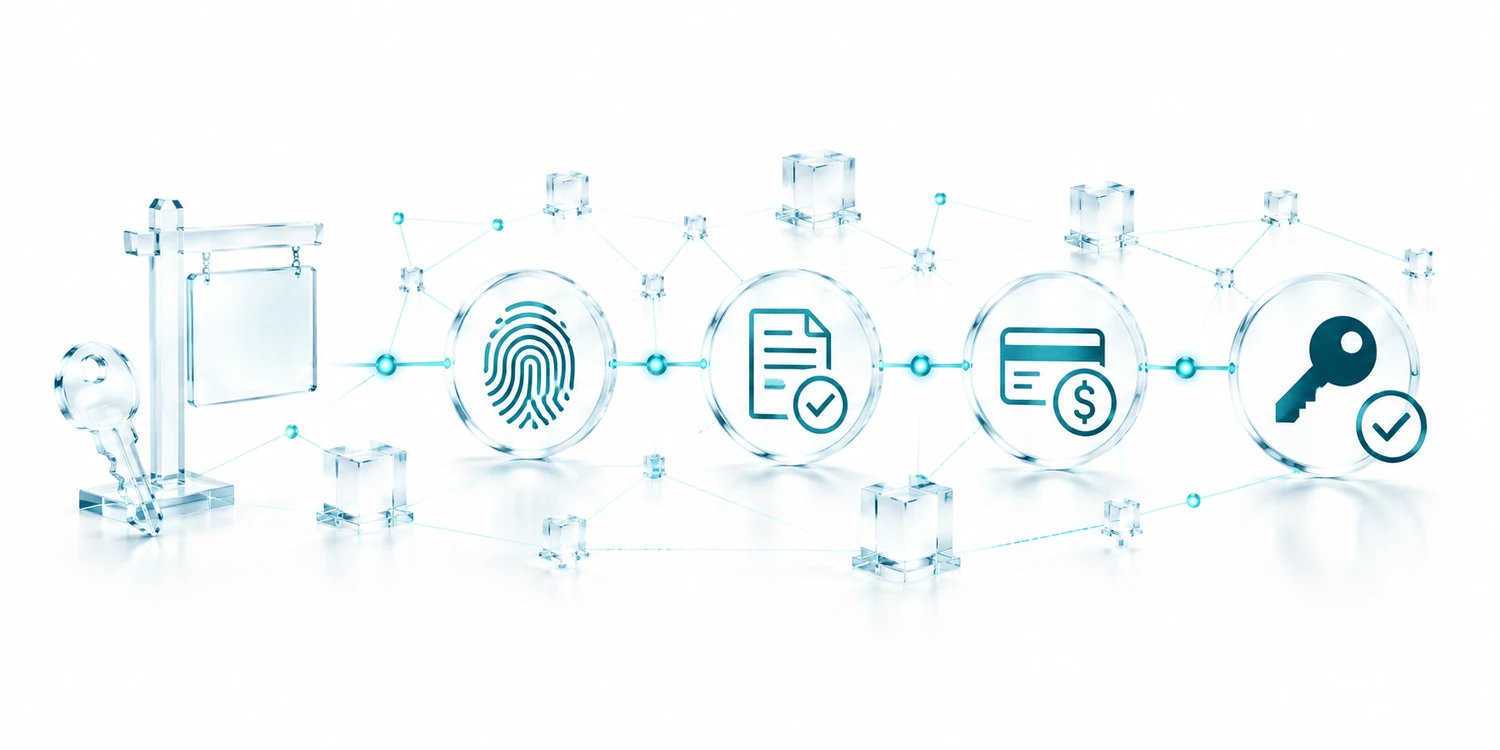
Your deed is one of the most important documents connected to your home. So what happens as property records become more digital?
For most homeowners, the important question isn’t how the technology works.
It’s:
“What could a digital deed mean for my ownership of my property?”
The simple answer is that the way we create, sign, record, verify and access property documents may become increasingly digital.
But that doesn’t mean your ownership suddenly becomes a cryptocurrency—or that your traditional deed simply disappears.
First, What Does Your Deed Actually Do?
A deed is a legal document used to transfer an interest in real property from one party to another.
When you purchase a home, the deed is an important part of documenting that transfer.
Depending on where the property is located, the deed is generally recorded with the appropriate local government recording office.
That official recording system remains extremely important.
A digital deed changes how the document may be created, handled or recorded—not the basic importance of establishing legal ownership.
Does a Digital Deed Mean My Paper Deed Disappears?
Not necessarily.
Real estate has already been moving toward electronic documents, electronic signatures, electronic recording and digital storage.
Different counties and states use different systems and have different requirements.
As those systems continue to evolve, homeowners may interact with fewer paper documents and more electronic records.
Blockchain could eventually become another part of that digital infrastructure.
But this would be a gradual evolution of property-record systems—not a switch where everyone’s paper deed suddenly becomes obsolete.
Where Could Blockchain Fit?
Blockchain could provide an additional way to verify certain information associated with a deed or property transaction.
Imagine a digital record that could help establish:
- What information was recorded
- When it was recorded
- Which transaction it was connected to
- Whether the record was later changed
That could potentially make certain parts of a property’s history easier to verify.
But the blockchain record and the legally recognized property record are not automatically the same thing.
Technology can help verify a record. The law determines how property ownership is legally recognized.
Could Someone Hack a Digital Deed and Take My House?
This is an understandable concern.
A property does not change legal ownership simply because someone changes information on a computer.
Real property ownership involves legal documents, identity verification, signatures, recording requirements and other safeguards.
Blockchain can also make certain records more difficult to alter without detection because information is cryptographically connected to previous records.
But no technology should be described as completely immune from fraud, mistakes or security risks.
There is another important point:
A secure system cannot make incorrect information correct.
If false or inaccurate information enters a system, technology alone may not know that it is wrong.
That’s why identity verification, accurate information, legal safeguards and human oversight remain important.
What If There Is a Mistake in a Blockchain Property Record?
This is a particularly important question for real estate.
Traditional property records sometimes need to be corrected.
Names can be misspelled. Legal descriptions can contain errors. Documents can be recorded incorrectly. Courts can resolve ownership disputes.
Blockchain systems are designed to preserve a history of records rather than quietly rewriting the past.
So correcting an error would generally involve creating a new record or transaction that documents the correction rather than pretending the original entry never existed.
Exactly how this would work for official property records would depend on the laws and systems adopted by the jurisdiction.
An accurate history doesn’t mean mistakes never happen. It means there can be a record of what happened and how it was corrected.
Would the County Still Record My Deed?
Under today’s property-recording systems, local government recording offices remain an important part of establishing the public record of real estate transactions.
Blockchain technology does not automatically replace them.
In the future, a county or other government agency could potentially choose to incorporate blockchain technology into its recording infrastructure.
If that happens, homeowners may not even need to understand the technology behind it.
Just as most people don’t need to understand the computer systems currently used by their county recorder, they may not need to understand the blockchain infrastructure supporting a future system.
The technology could change behind the scenes while the homeowner’s experience remains surprisingly familiar.
Could I See More of My Property’s History Digitally?
Potentially.
One interesting possibility is creating more connected digital property histories.
Imagine being able to access verified information connected to a property, such as certain ownership transfers or other authorized property records, through connected digital systems.
Over time, a property could potentially develop a more complete digital history.
Exactly what information should be public, private or restricted would be an important part of designing these systems.
Not every piece of information about a home belongs on a public blockchain.
Transparency and privacy have to be balanced.
Would I Need a Crypto Wallet to Own My Home?
Not simply because property records become more digital.
A blockchain-based system could be designed in many different ways.
Homeowners might interact with a normal website or application without ever seeing the blockchain technology operating behind it.
Just as you don’t need to understand how banking networks work to use online banking, future homeowners may use blockchain-based services without needing to understand wallets, tokens or the technical infrastructure underneath them.
What Happens When I Sell My Home?
This is where digital property records could eventually become especially useful.
When a property is sold, information must move between many different parties.
A more connected digital system could potentially help verify records, track transaction milestones and connect information used during the transfer.
Blockchain might provide part of the recordkeeping infrastructure.
Smart contracts might automate certain predetermined actions.
AI might help organize and analyze information.
Digital identity systems might help verify participants.
But the legal requirements for transferring real estate would still need to be satisfied.
What Should Homeowners Do Today?
For most homeowners, there is nothing special you need to do simply because blockchain technology is developing.
You don’t need to tokenize your home.
You don’t need to put your deed into a crypto wallet.
And you don’t need to move your property records onto a blockchain yourself.
The most useful thing you can do right now is understand the terminology and pay attention as property-record systems evolve.
That way, when you begin hearing terms such as digital deeds, blockchain property records, smart contracts or tokenized real estate, you’ll understand what they mean—and what they don’t mean.
The Simple Takeaway
A digital deed doesn’t change the fact that your home is real property governed by real property laws.
What may change is the technology used to create, record, verify and access information about that ownership.
Blockchain could eventually become part of that infrastructure.
But remember:
Technology can help verify a record.
The law determines how property ownership is legally recognized.