
A smart contract may sound complicated, but the basic idea is actually pretty simple.
A smart contract is a computer program that runs on a blockchain and can automatically perform certain actions when predetermined conditions are met.
Think of it as:
“If this happens, then do that.”
Instead of someone manually completing every step, certain parts of a process can be programmed to happen automatically.
A Simple Everyday Example
Think about a vending machine.
You insert the correct amount of money, select what you want, and the machine automatically gives you the item.
The machine doesn’t need someone standing there to approve the transaction.
The rules have already been established:
If the correct payment is received → release the selected item.
A smart contract works on a similar basic principle, except the instructions are written in computer code and executed through a blockchain network.
What Could That Mean in Real Estate?
Real estate transactions involve many steps and conditions.
A buyer may need to deposit earnest money.
An inspection may need to be completed.
Financing may need to be approved.
Documents may need to be signed.
Funds may need to be transferred.
The deed may need to be recorded.
Today, many of these steps are handled separately by people, companies and different software systems.
Smart contracts could potentially help connect and automate certain parts of that process.
A Simple Real Estate Example
Imagine a future real estate transaction where certain conditions have been programmed into a blockchain-based system.
The system might be instructed:
If required documents are completed → move to the next step.
If an agreed payment is received → record that the payment requirement has been satisfied.
If all required conditions are met → authorize another predetermined action.
Instead of someone manually checking and updating every step, technology could perform some of those actions automatically.
Are Smart Contracts the Same as Legal Contracts?
No—and this is an important distinction.
Despite the name, a smart contract is primarily computer code.
A traditional real estate contract is a legal agreement that establishes the rights and obligations of the parties.
The two can potentially work together, but they are not automatically the same thing.
For example, a purchase agreement might establish what a buyer and seller have legally agreed to, while technology could someday help automate certain actions associated with that agreement.
The legal agreement establishes the obligations. The smart contract can help carry out programmed actions.
Could Smart Contracts Replace Real Estate Professionals?
Not necessarily.
Real estate transactions involve much more than moving information or money.
Buyers and sellers need advice. Properties need to be evaluated. Titles need to be examined. Financing requirements must be satisfied. Laws and regulations must be followed. Problems and unexpected circumstances need to be handled.
Technology may automate certain repetitive or administrative steps, but that doesn’t mean the people involved in a transaction simply disappear.
Instead, smart contracts could become another tool professionals use to help transactions operate more efficiently.
How Could Smart Contracts Be Used?
As blockchain-based real estate systems continue to develop, smart contracts could potentially help with things such as:
Payments
Triggering or documenting certain payments when predetermined requirements are satisfied.
Transaction Milestones
Recording when certain steps or conditions in a transaction have been completed.
Tokenized Real Estate
Managing certain rules involving the issuance, transfer, or distribution of digital tokens representing interests in real estate.
Property Management
Automating certain processes involving rent, deposits, or other recurring transactions.
Digital Records
Connecting actions in a transaction with blockchain-based records that provide a verifiable history.
Exactly how these systems are used will depend on the technology, the transaction, and applicable laws and regulations.
Why Does This Matter?
Real estate transactions involve many parties and many steps.
Blockchain and smart contracts create the possibility of connecting some of those steps through programmable digital systems.
That could eventually change how information moves between buyers, sellers, agents, lenders, title companies, attorneys, government offices and other participants in a transaction.
The goal isn’t necessarily to remove people from real estate.
It may be to allow technology to handle some of the processes that people currently have to manage manually.
What Could the Future Look Like?
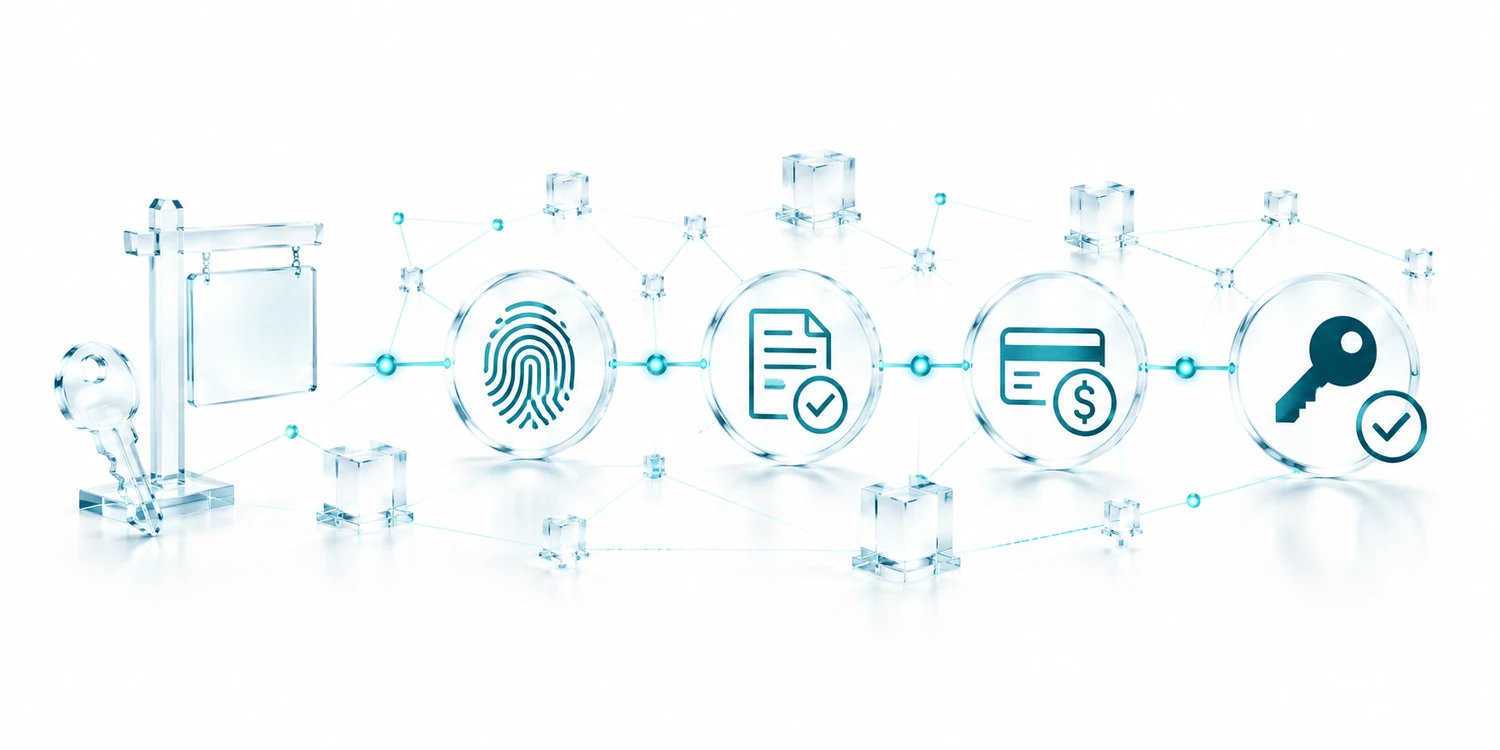
Imagine a real estate transaction where documents, payments, identity verification, digital property records and other transaction information can securely interact.
When one required step is completed, the next appropriate action could automatically begin.
Smart contracts could become part of the technology connecting those pieces together.
How widely this happens will depend on adoption, regulation, legal recognition and the development of the technology itself.
But understanding smart contracts today helps us understand how a more connected digital real estate transaction could work tomorrow.
The Simple Takeaway
A smart contract is a computer program on a blockchain that can automatically perform certain actions when predetermined conditions are met.
It is not automatically the same thing as a legal contract.
In real estate, smart contracts could potentially help automate parts of transactions, payments, digital records and tokenized ownership systems.
A simple way to remember it is:
The legal agreement says what should happen.
The smart contract can help make certain programmed actions happen.