
Blockchain Explained Simply
A simple, plain-English explanation of what blockchain is, how it works, and why it could matter for the future of real estate.
What Is Blockchain?
Blockchain is a way of recording and storing information digitally so that it can be securely shared and verified.
Think of it like a digital record book. Instead of relying on one central copy, copies of the record can be maintained across a network. When new information is added, it becomes part of a permanent history that is extremely difficult to secretly change.
Understanding Blockchain Step by Step
Explore the basics of how blockchain works, why it is secure, and how it could be used in real estate.
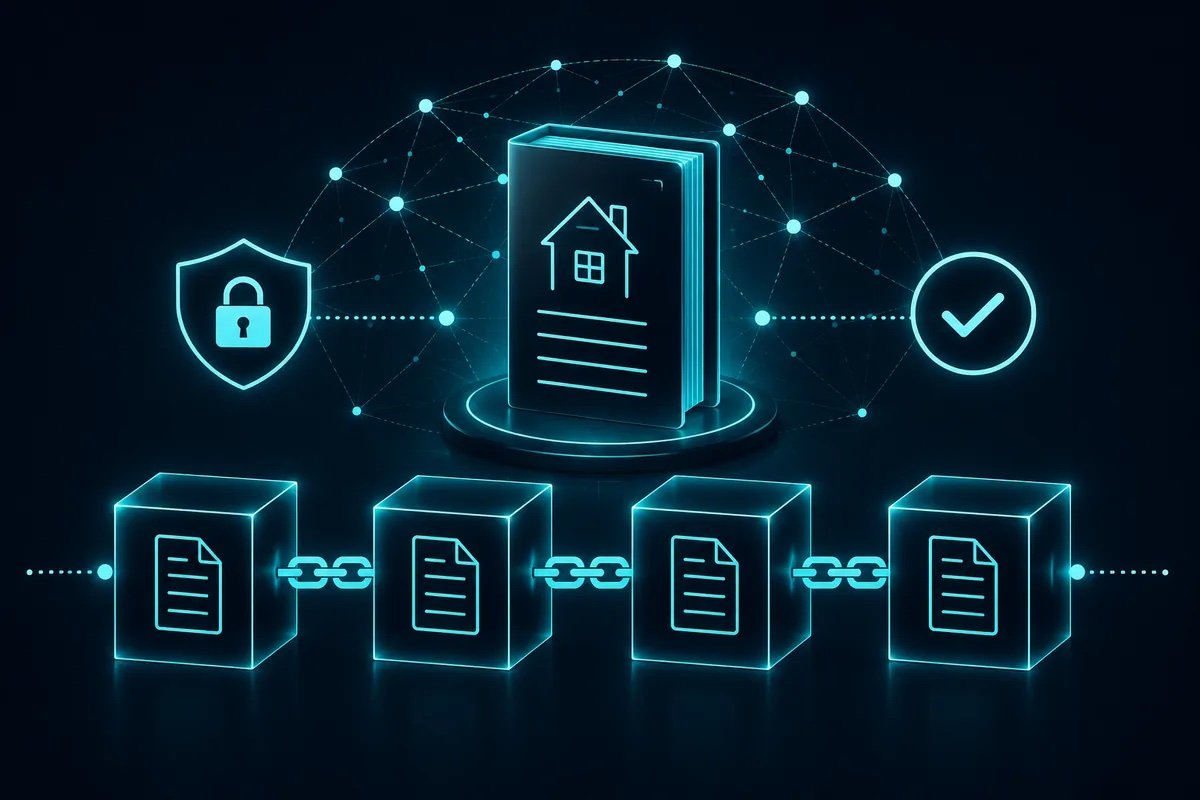
What Is Blockchain?
A blockchain is a digital record book that stores information in a secure and organized way. Records are grouped together and connected in order, creating a history that can be verified.
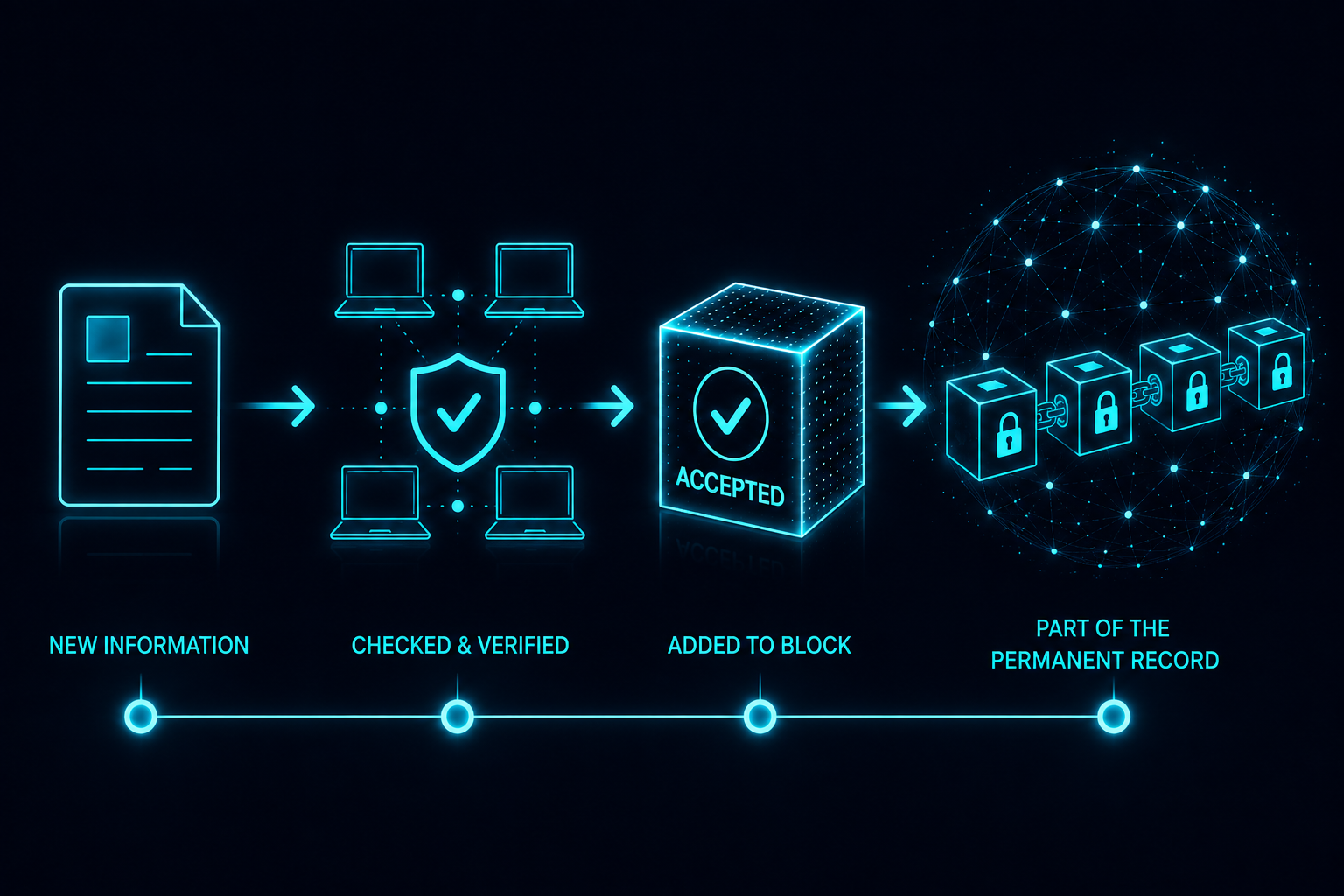
How Does It Work?
New information is checked before it is added to the blockchain. Once accepted, it becomes part of the permanent record.
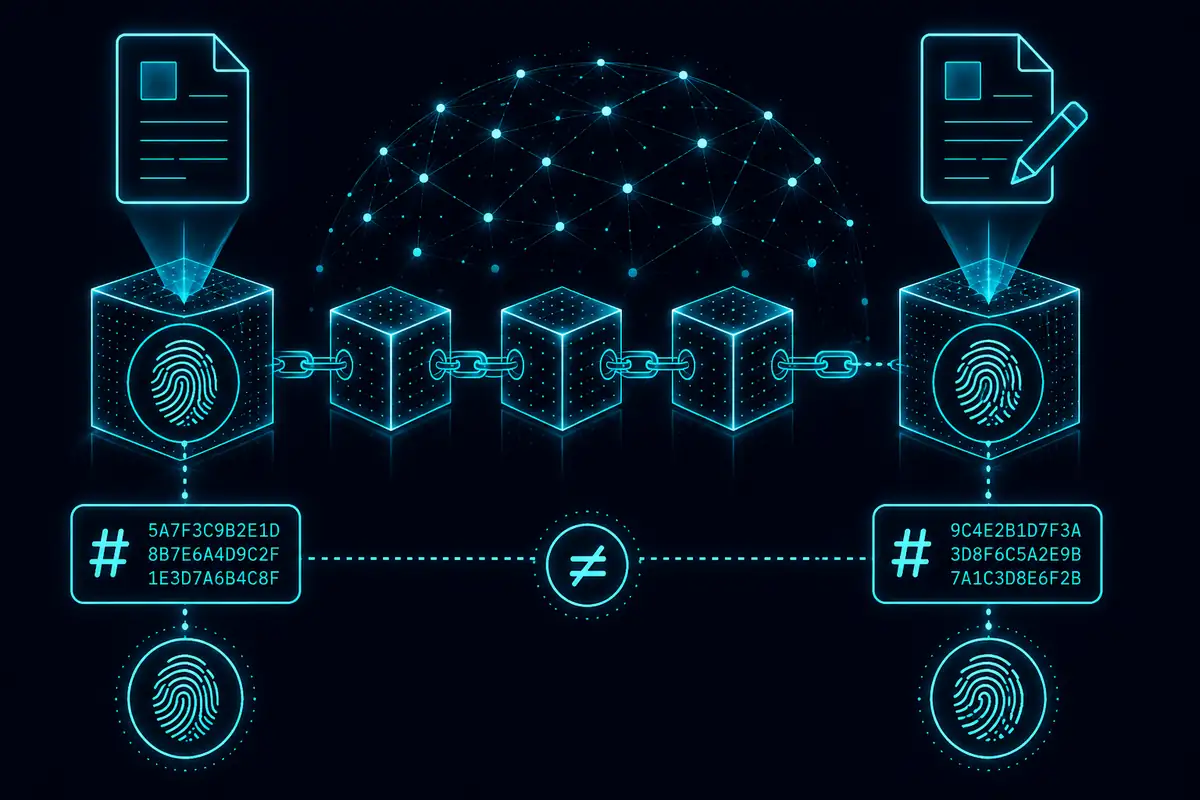
Why Is Blockchain Hard to Change?
Each record has a unique digital fingerprint. If someone changes the information, the fingerprint changes too, making the change easy to detect.
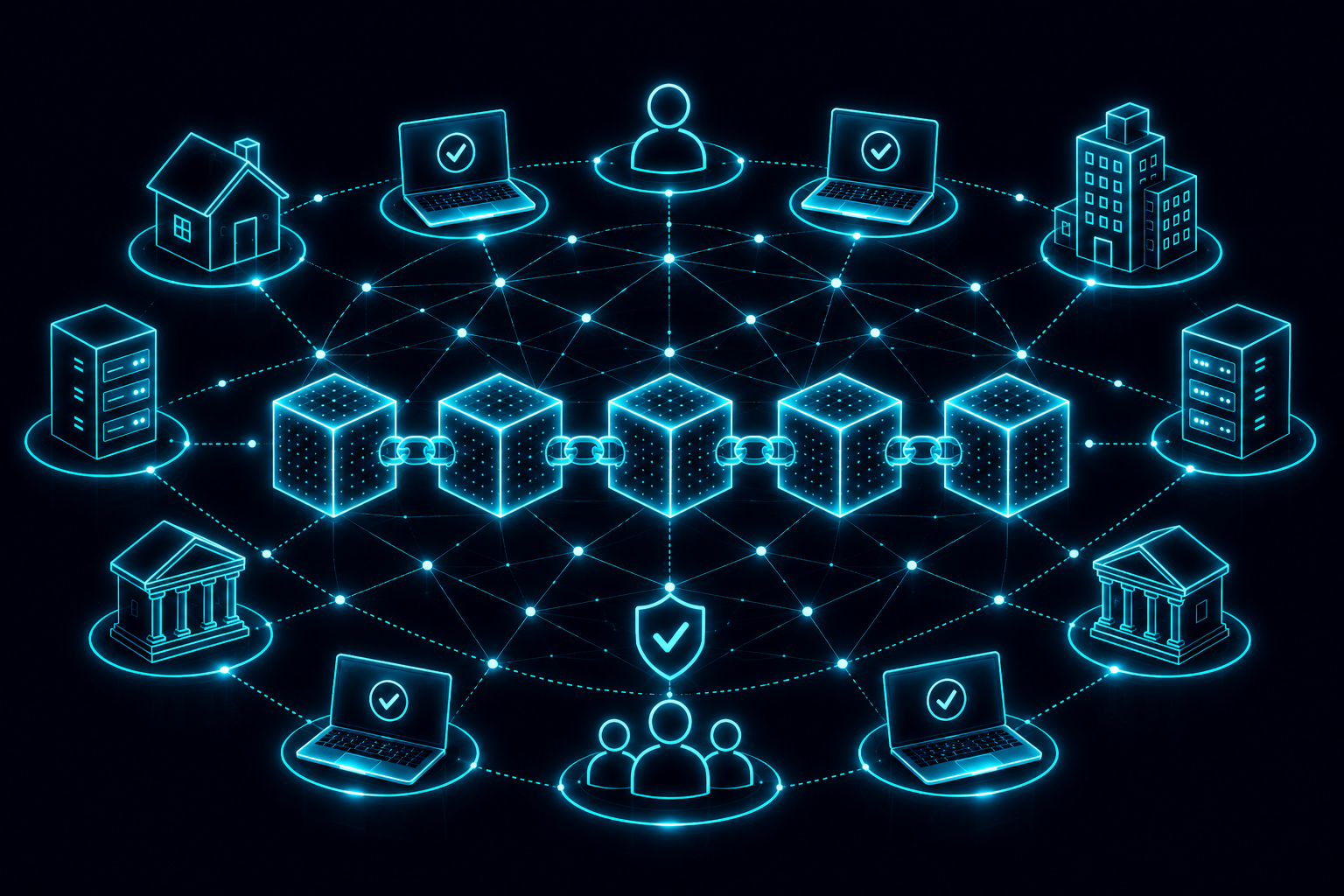
Who Keeps the Blockchain Running?
A blockchain network is made up of computers or participants connected to the same blockchain. Depending on the blockchain, these may include individuals, companies, financial institutions, or other organizations. They follow the blockchain's rules to check new information and help maintain its records.
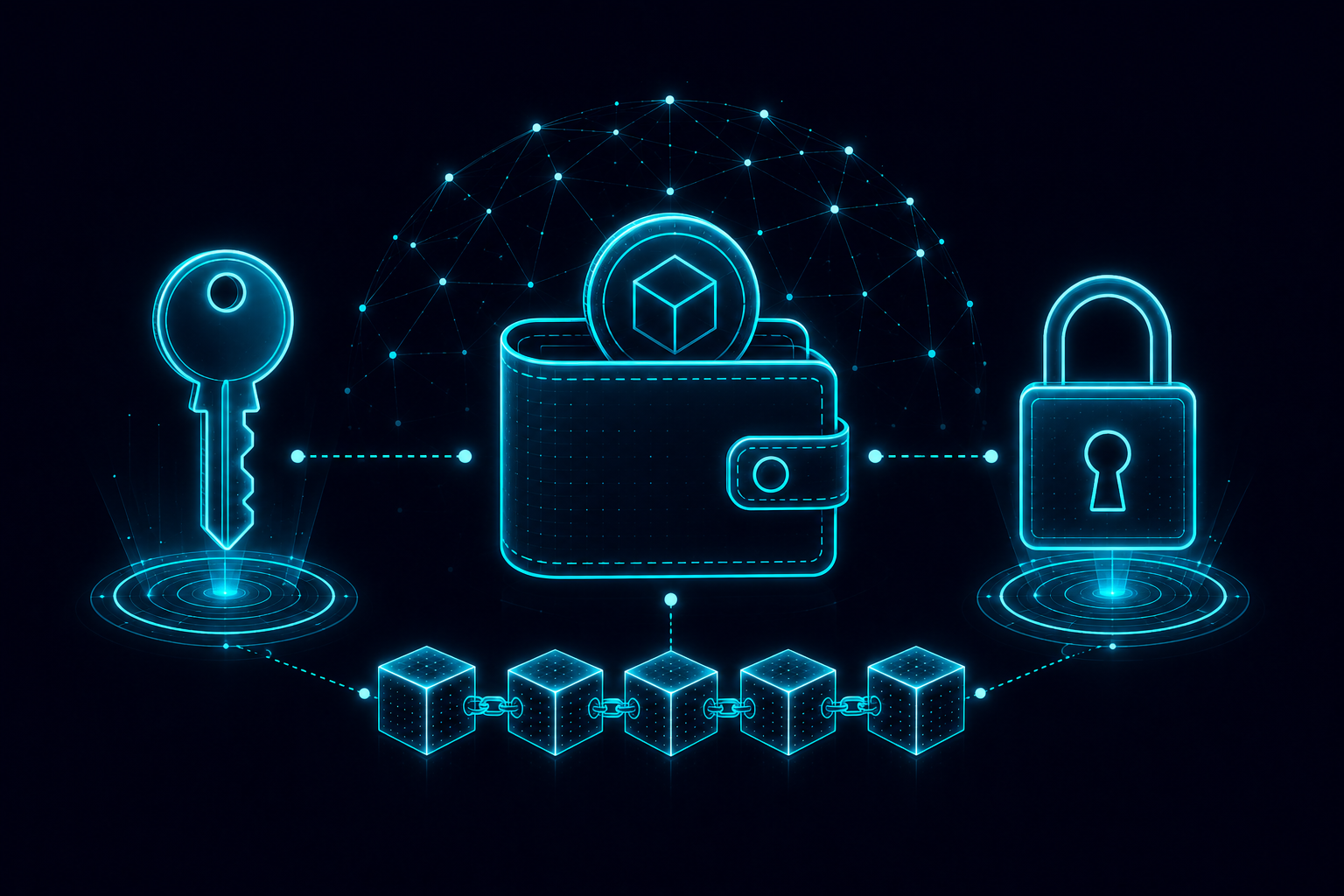
What Are Wallets & Digital Keys?
A digital wallet helps you interact with a blockchain. Digital keys are used to prove that you have permission to access or approve certain actions.
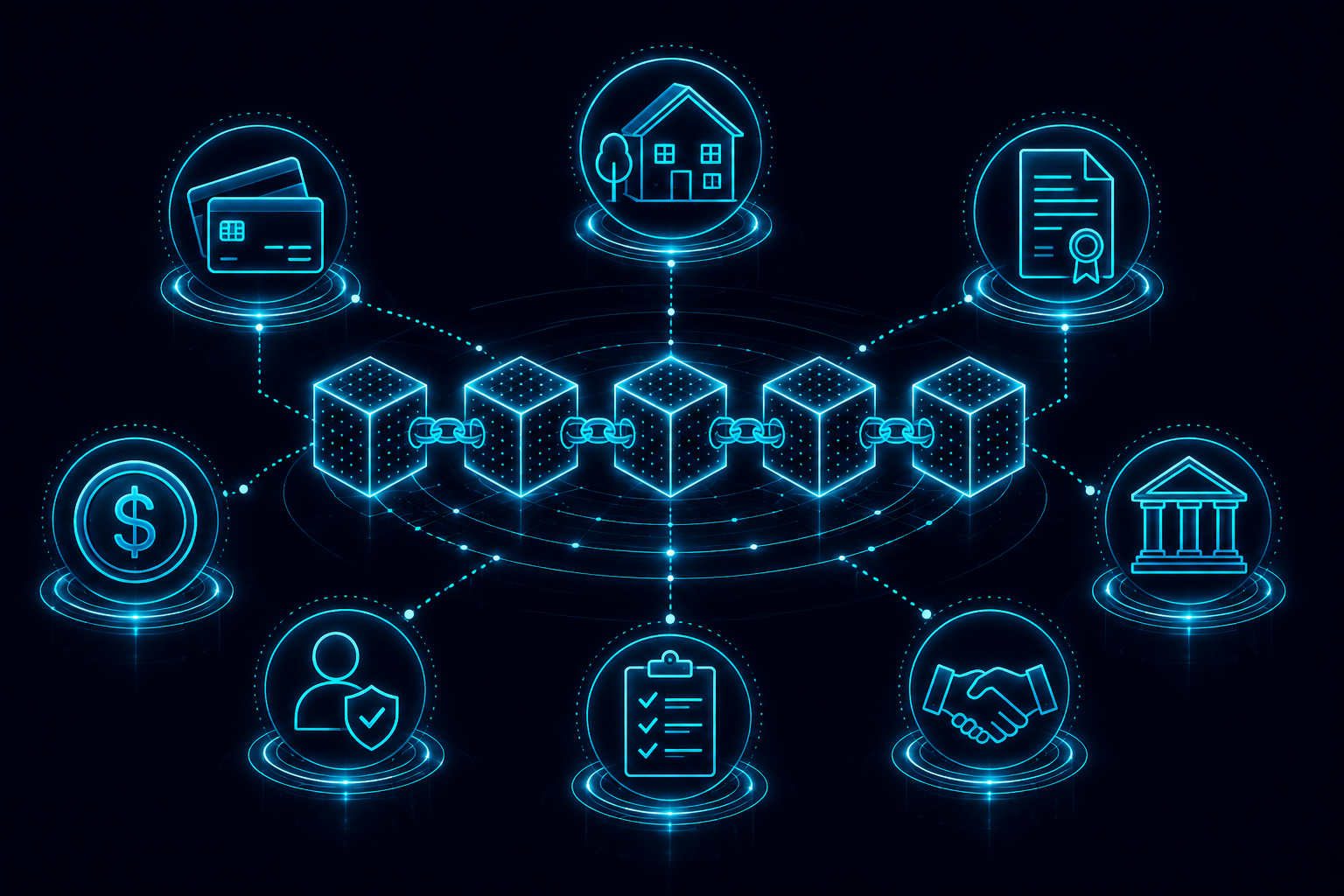
What Can Blockchain Actually Be Used For?
Blockchain can be used to record and verify things like payments, property records, ownership, contracts, and other important information.
From Information to Blockchain
Here’s what happens when new information is added to a blockchain, step by step.
Information Is Submitted
A transaction, document, or other piece of information is submitted to the network.
The Network Checks the Information
Participating computers follow the blockchain's rules to determine whether the information can be accepted.
A Digital Fingerprint Is Created
The information receives a unique digital fingerprint, called a hash.
Information Is Added to a Block
Verified information is grouped with other records into a block.
The Block Is Connected
The new block is connected to the blocks that came before it, continuing the blockchain's history.
The Record Can Be Verified
The blockchain provides a record that can later be checked to confirm that the information hasn't been changed.
IMPORTANT TO KNOW
Blockchain verification does not automatically prove that every real-world fact is true.
For example, blockchain can help verify that a digital property record has not been changed. But it does not, by itself, determine who legally owns a property. Legal ownership still depends on the appropriate legal documents and recording process.
Why Is Blockchain Hard to Change?
Blockchain records are designed so that changes can be detected. One of the ways this works is through something called a digital fingerprint, or hash.
How a Digital Fingerprint Works
A digital fingerprint, called a hash, is created from the information in a record. If even a small part of that information changes, the fingerprint changes too.
01
Original Property Record
Imagine a property deed contains this information: Owner: Jane Smith Property: Lot 5, Block 2
Property: Lot 5, Block 2
02
A Fingerprint Is Created
The record is run through a mathematical process that creates a unique digital fingerprint, called a hash.
03
Original Fingerprint
This fingerprint represents that exact version of the record.
04
Now Change One Detail
Imagine someone changes the property description from: Lot 5, Block 2 to Lot 6, Block 2
to Lot 6, Block 2
05
The Fingerprint Changes
The altered record creates a completely different fingerprint.
06
New Fingerprint
It no longer matches the fingerprint of the original record
07
The Difference Is Detectable
Comparing the fingerprints shows that the information has changed — even if the change was very small.
08
Why This Matters for Property Records
A digital fingerprint can help verify that a property record is the same version that was originally recorded.
So, What Does Blockchain Actually Do?
Blockchain creates a way to record information, keep track of what happened, and help detect if a record has been changed. It doesn’t replace the systems we use today—but it can add another layer of security and verification to digital records.
Payments
Blockchain can be used to send and record digital payments, allowing value to move directly between participants. Simple example: A buyer sends digital funds to an escrow account.
Property Records
Blockchain can help create verifiable digital records connected to property ownership and important documents. Simple example: A recorded deed can have a digital fingerprint that helps verify it hasn't been changed.
Digital Ownership
Blockchain can be used to create digital records showing ownership or rights connected to an asset.
Simple example: A digital token could represent ownership rights in an asset or a share of one
Smart Contracts
Smart contracts are programs that can automatically carry out certain actions when predetermined conditions are met. Simple example: Once required conditions are satisfied, a smart contract could trigger the next step in a transaction.
Identity Verification
Blockchain can help support digital systems that verify information about a person without repeatedly sharing the same documents. Simple example: A buyer could prove that their identity was verified without putting all of their personal information on a public blockchain.
Tracking Assets
Blockchain can create a history showing when an asset or record was created, transferred, or updated. Simple example: The history of a digital asset can be followed from one owner to the next.
Know a company we should feature?
This list is just the start. If there’s a company putting blockchain to work in real estate, we’d love to hear about it.